
Claude Fable 5.2 hands-on: top-tier frontend taste, still a painful price
Anthropic has released Claude Fable 5.2, cutting unit prices by 20% and claiming 30% faster output. In launch-day tests on three pure frontend projects, Programmer Yupi found its design taste still top-tier but its gains over Opus 5.5 modest, and the three projects cost more than RMB 500.
In the early hours of November 10, Beijing time, Anthropic released two top-tier models at once: Claude Fable 5.2 and Claude Mythos 5.2.
The two are actually the same model. Fable adds safety guardrails for cybersecurity and biology, which lets it be offered to everyone; Mythos drops those guardrails and is available only to vetted security and biomedical organizations. Fable 5.2 is the one ordinary users can access.
A top model gets cheaper
The biggest surprise is the price. Fable 5.2’s input price drops from $10 to $8 per million tokens and output from $50 to $40, making it 20% cheaper overall. Anthropic also says generation is 30% faster than 5.1.
When Programmer Yupi (程序员鱼皮) tested Fable 5.1 earlier, just three projects cost nearly RMB 470. At the new prices, this round should have stung a little less.
Capabilities: clear gains in coding and vision
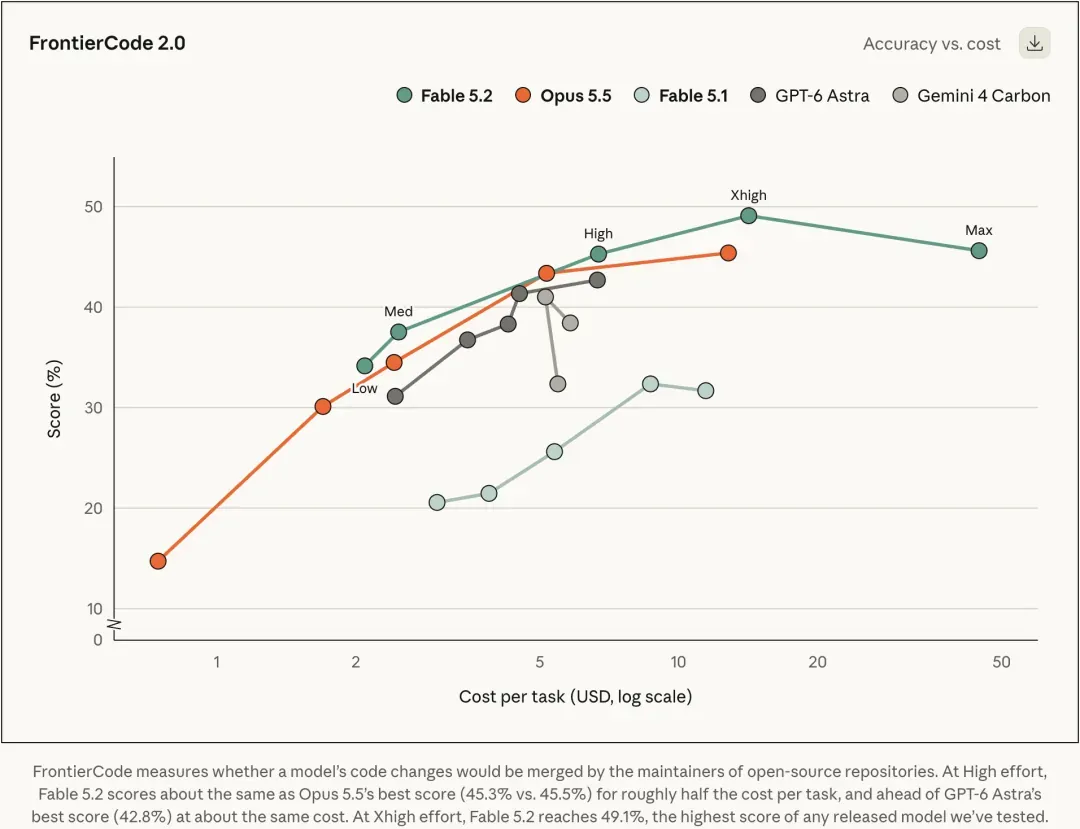
On FrontierCode 2.0, an agentic coding benchmark, Fable 5.2 scores 49.1%, compared with 45.5% for Opus 5.5 and 42.8% for GPT-6 Astra. The benchmark measures whether code changes made by AI would actually be merged by open-source maintainers, which makes it closer to real-world development than coding-exercise tests.
Anthropic also published a cost comparison: at the High setting, Fable 5.2 matches the score of Opus 5.5 at its highest setting, at roughly half the cost per task.
Most relevant to frontend work is visual understanding. On the chart-comprehension benchmark Chartography, the score jumps from 44.8% for Fable 5.1 to 73.4%. When AI builds a frontend, it relies on screenshots to check whether the page looks good, so a gain here should also make it better at spotting visual problems on its own.
| Benchmark | Fable 5.2 | Fable 5.1 | Opus 5.5 | GPT-6 Astra |
|---|---|---|---|---|
| FrontierCode 2.0 | 49.1% | 32.4% | 45.5% | 42.8% |
| Chartography (no tools) | 73.4% | 44.8% | 64.4% | 71.0% |
Official showcase: an operating system in 8 days
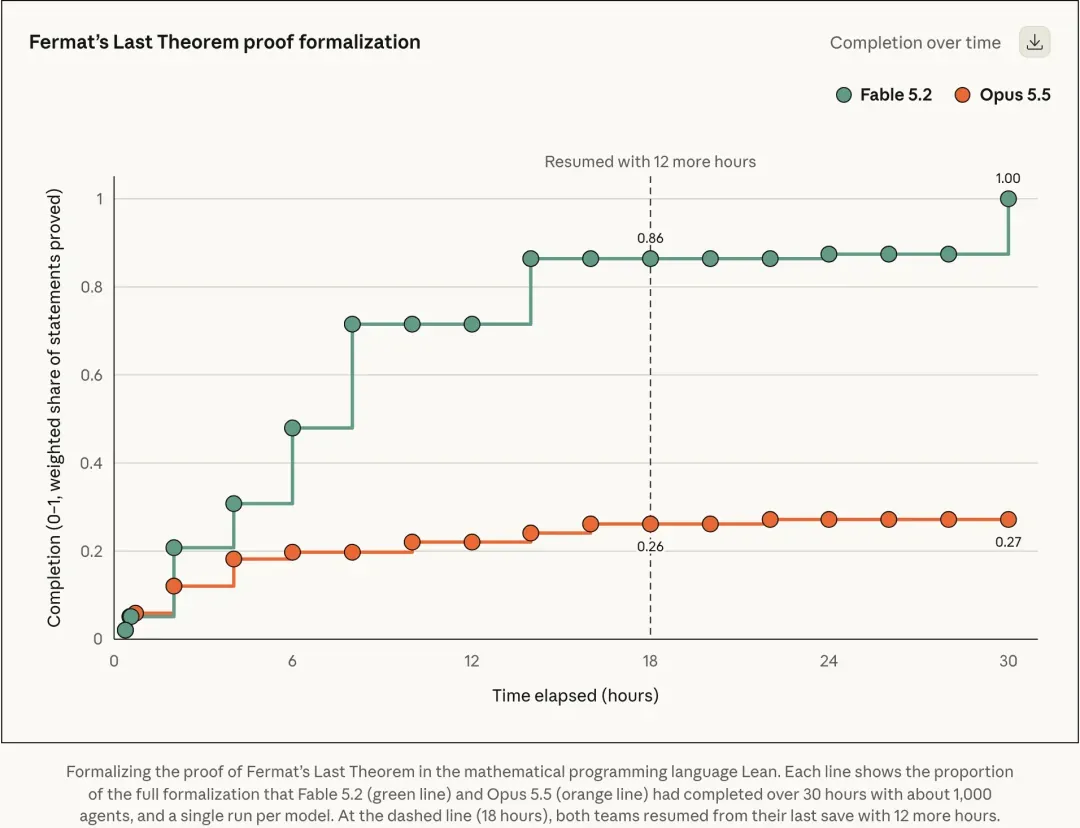
Anthropic also showed off some remarkable examples. In one, more than 1,000 Fable 5.2 agents worked for 8 days straight and wrote, from scratch, an operating system that boots on a laptop. In another, 1,000 agents completed a formal proof of Fermat’s Last Theorem in just 30 hours; with the same setup, Opus 5.5 completed only 27%.
Still, these are Anthropic’s own claims. Whether the model is actually good to use has to be tested on real projects.
Test method: three pure frontend projects, no human intervention
For this test, three sub-agents ran in parallel in Cursor, each using Fable 5.2 and each working in its own project directory. There was no human intervention at any point; each project was reviewed after the runs finished.
Yupi’s previous reviews tested both frontend and backend; this time only the frontend was tested. Backend was first left out because models couldn’t finish it; now it is left out because top models rarely have trouble with backend work anymore. All three projects are pure frontend, designed specifically to test the AI’s design taste and attention to detail:
- Turn an AI programming learning roadmap into an ancient scroll
- Chongqing 8D city generator
- Exploring the Yaolin Wonderland cave
Project 1: a learning roadmap as an ancient scroll
The source material for the first project was the "AI Programming Learning Roadmap" from Yupi’s open-source tutorials. Divided into six stages, from getting started to continuous learning, the article is long, which makes it a good test of whether AI can give long-form content real design.
The prompt made only two core demands: the result had to be top-tier beautiful and hold up under close inspection, and opening the page should feel like ceremonially unrolling an ancient artifact. What style the "ancient scroll" should take was left entirely to the AI.

During the run, the AI first parsed the Markdown into a page, then drew the paper texture, brocade patterns, landscapes and seals entirely in SVG code. It even subset the calligraphy font to the characters the article actually uses. The first version worked on the first try, after which the AI revised it over six rounds by reviewing its own screenshots. The whole process took about 86 minutes, which is admittedly a bit slow.
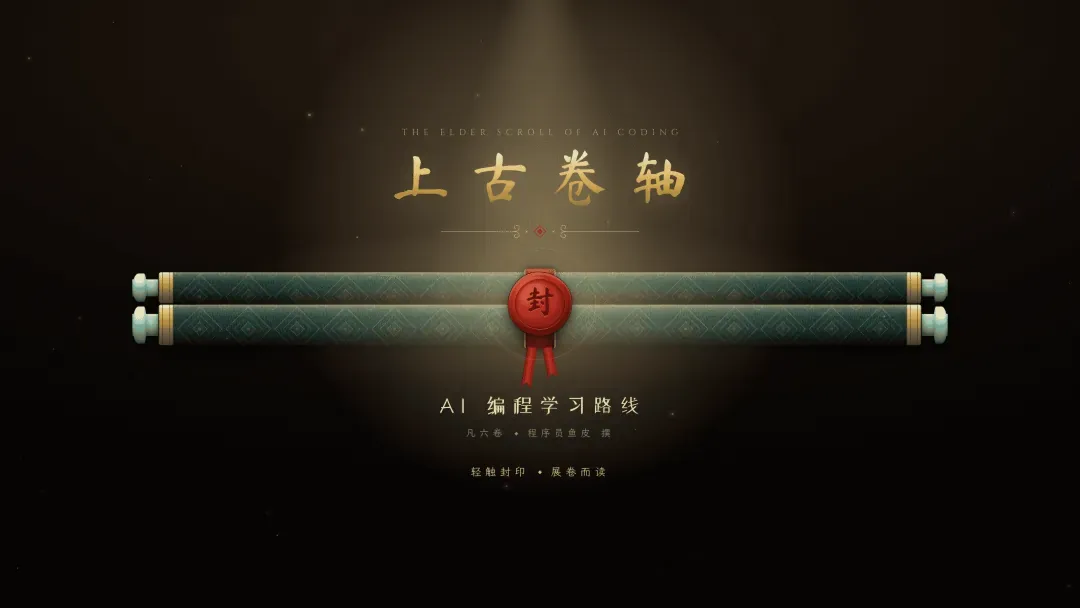
The result is in a classical Chinese style. A beam of light falls through the darkness onto a scroll with a blue-green brocade cover, tied with a vermilion ribbon and closed with a wax seal bearing the character 封 ("sealed").
Click the seal and the upper and lower rollers pull apart, slowly revealing the head of the scroll: a large calligraphic title, seals, distant ink-wash mountains and a red sun, with a string of tassels hanging in the top-right corner.

Scrolling down reveals a table of contents for six volumes. The AI drew a line-art emblem for each of the six stages and gave each a two-character volume name: Enlightenment, Tools, Mindset, Trials, Ascent and Unceasing.

The body layout is just as polished: the images from the original article are set into frames that blend into the paper.

Overall, Fable 5.2’s design taste is very strong. But Opus 5.5 had already delivered plenty of surprises, so on this case alone Yupi placed it between the "elite" and "top-tier" ratings. It could score higher still if the visuals looked more aged, with more dust grain and atmosphere.
Project 2: Chongqing 8D city generator
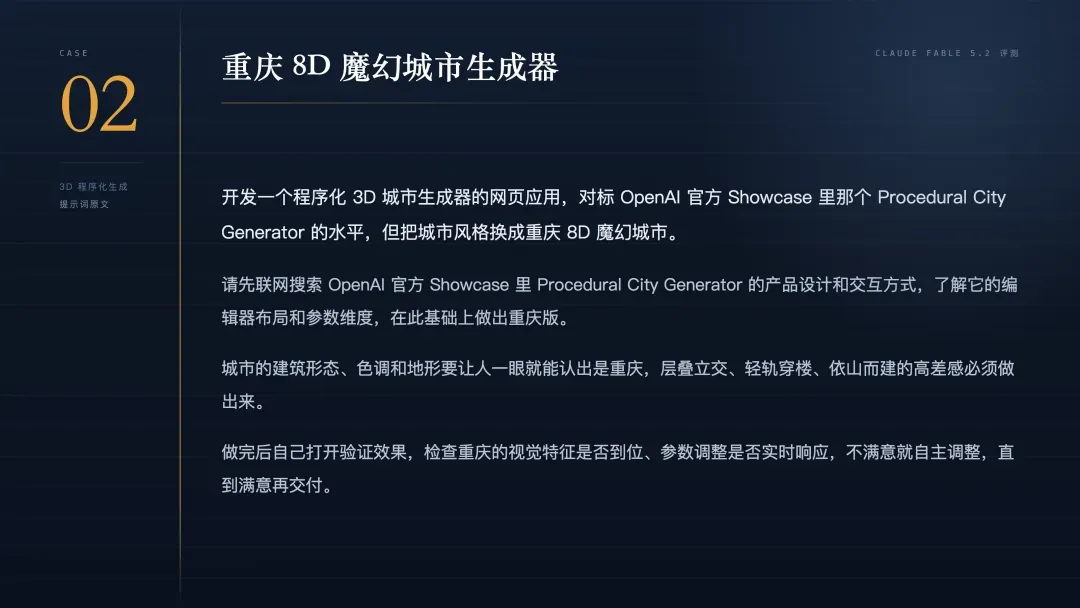
This is a standing test in Yupi’s reviews. GPT-6 Astra, Claude Opus 5.5 and GPT-6 Sol were all run on the city generator with the same prompt, and Fable 5.2 got exactly the same prompt, word for word.
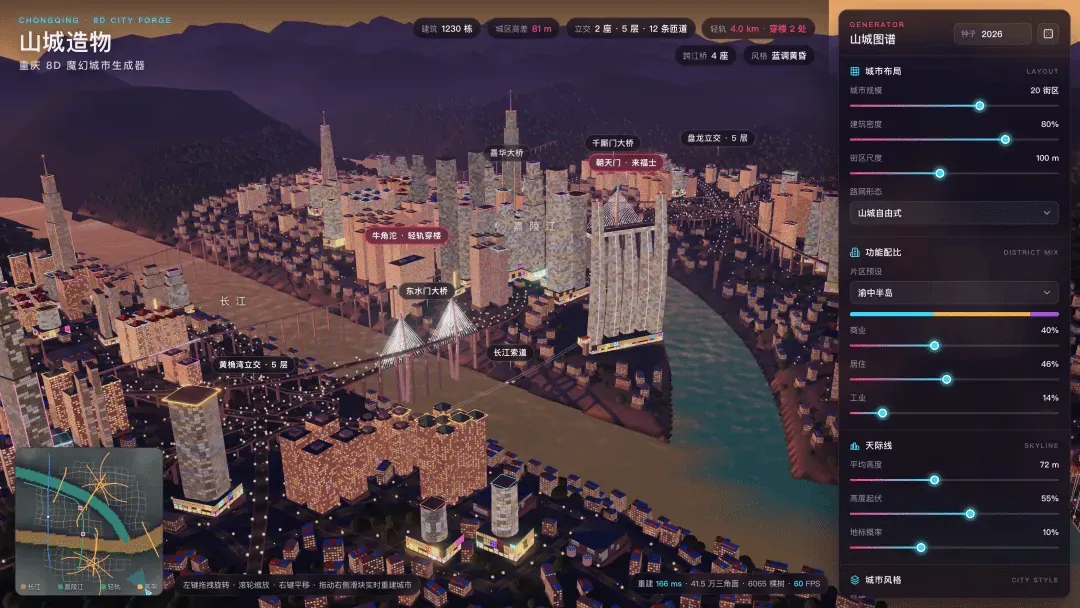
The AI first searched online for the panel layout of the official version, then ran smoke tests with 15 parameter sets in Node to confirm the generator threw no errors before opening a browser to check the result. From screenshots, it found the image looked washed out, the openings where the light rail passes through buildings were hard to see, and landmark labels overlapped. It revised over four rounds and took about 88 minutes in total, almost the same as the 86 minutes Opus 5.5 took. Both are very slow.
The first screen shows the Yuzhong Peninsula at blue-hour dusk, embraced by two rivers, with strings of lights on the bridges spanning them. The details are spot on. On the right is a full generator panel, with live stats at the top for building count, elevation range, interchange levels and light-rail length.
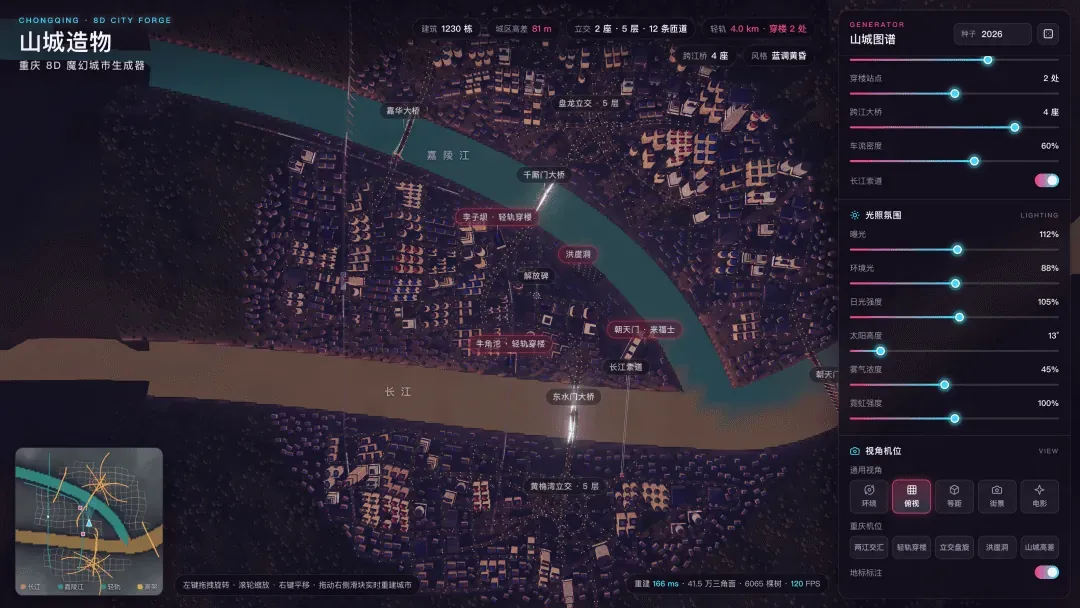
Switch to a top-down view and the muddy-yellow Yangtze and jade-green Jialing River are clearly distinguishable where they meet at Chaotianmen.
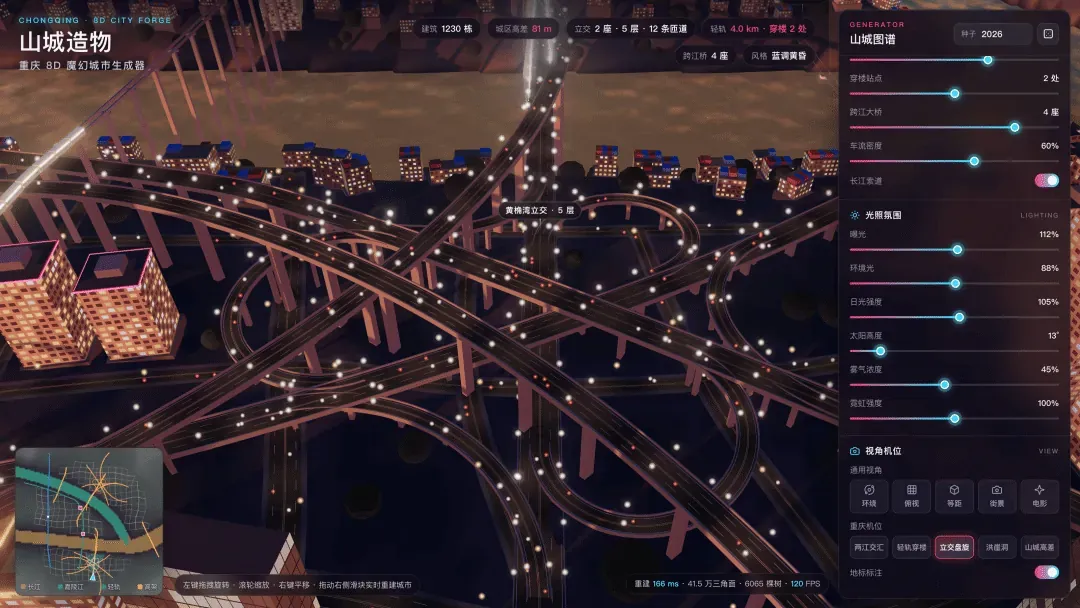
The panel comes with 10 preset camera positions. Besides standard views such as orbit, top-down and isometric, five are made specifically for Chongqing: the river confluence, light rail through a building, the spiraling interchange, Hongyadong and the mountain city’s elevation changes.
It has weak spots, too. In the spiraling-interchange view, the ramps of the Huangjuewan Interchange loop inside one another while dots of traffic light stream back and forth. It is dizzying to watch, and less detailed than the rest of the scene.
The city style can be switched with one click. Styles such as Magic Neon Night, Foggy Morning and Old Chongqing differ completely in tone and atmosphere; it is not just a color swap.
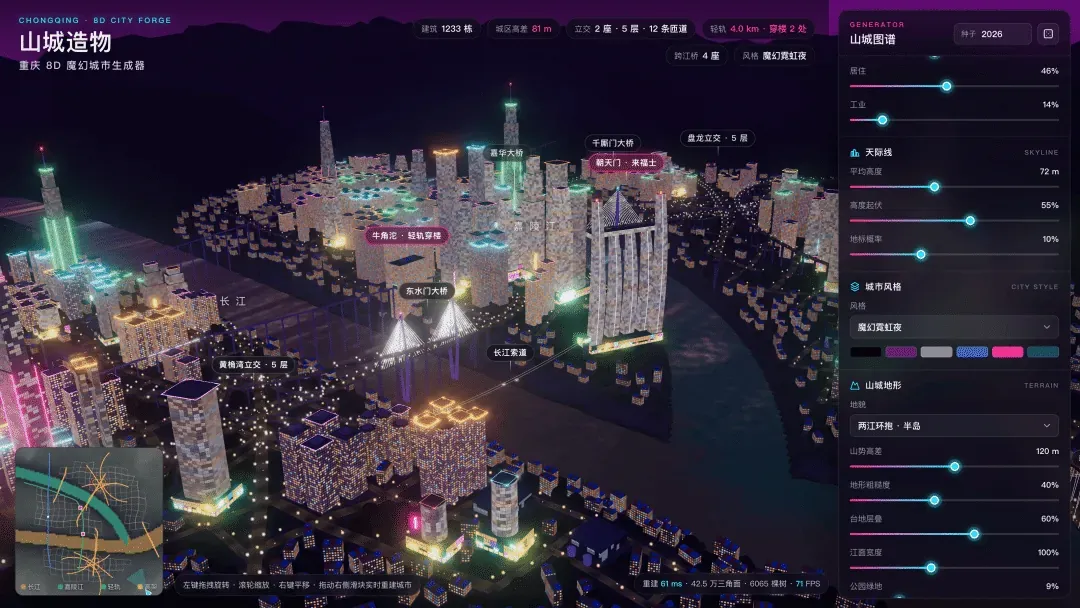
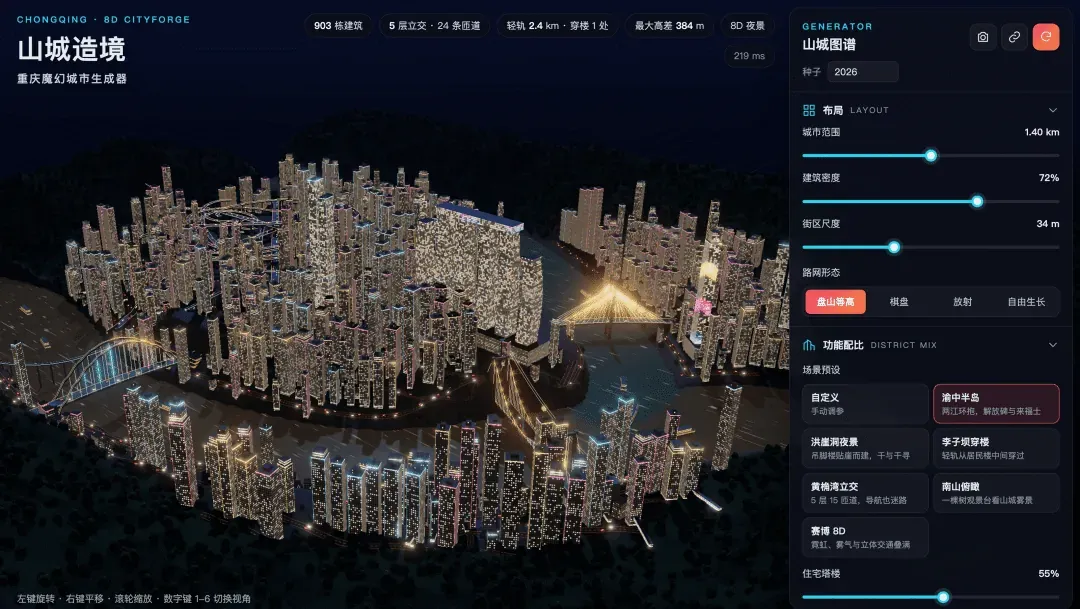
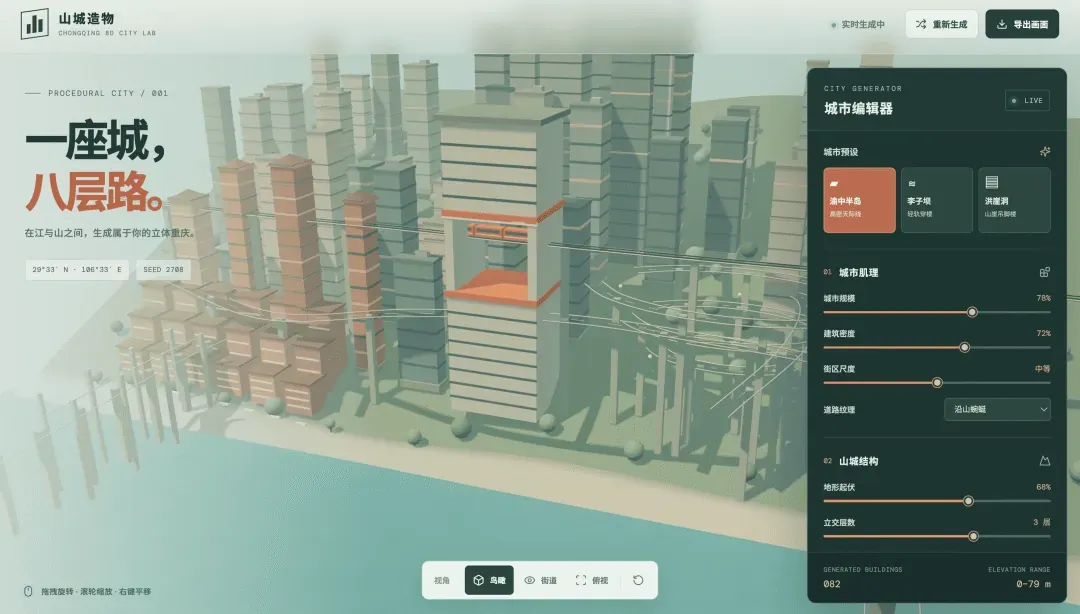
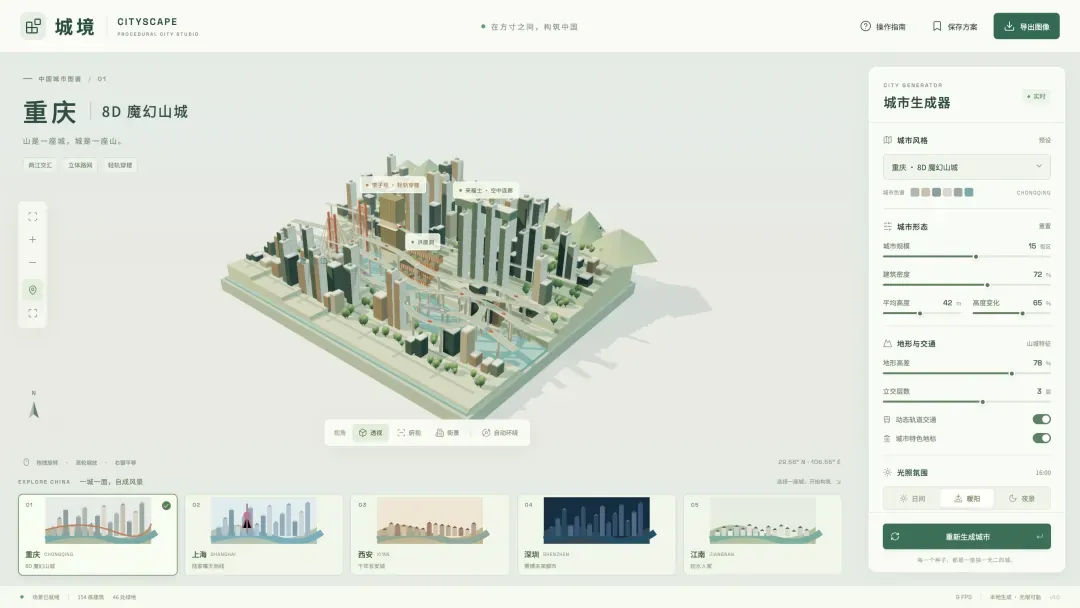
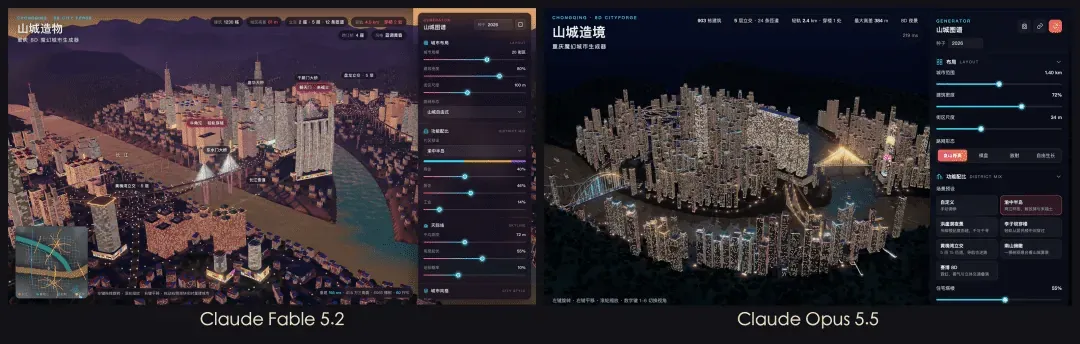
Here is how it compares with earlier models’ versions:
| Model | Time | Result |
|---|---|---|
| Fable 5.2 | About 88 min | Dusk version; highly refined, with the richest features (adds a minimap in the bottom-left corner) |
| Opus 5.5 | About 86 min | Night version; as refined as Fable 5.2 |
| GPT-6 Sol | About 12 min | Fastest, but the buildings are just gray-green boxes |
| GPT-6 Astra | — | Ran the five-city version at the time; judged on the Chongqing style alone, its detail falls clearly short of Claude’s top models |
Project 3: exploring the Yaolin Wonderland cave
The third project draws on Yaolin Wonderland in Tonglu, a karst cave attraction full of color. The task: have the AI build the cave from scratch in code, then place a lifelike 3D big yellow dog inside so users can guide it through the cave.
The dog is part of the test, too: can Fable 5.2 sculpt a decent-looking dog in pure code? The prompt included one hard rule: both the dog and the cave must be generated in code, with no ready-made 3D models or texture files.
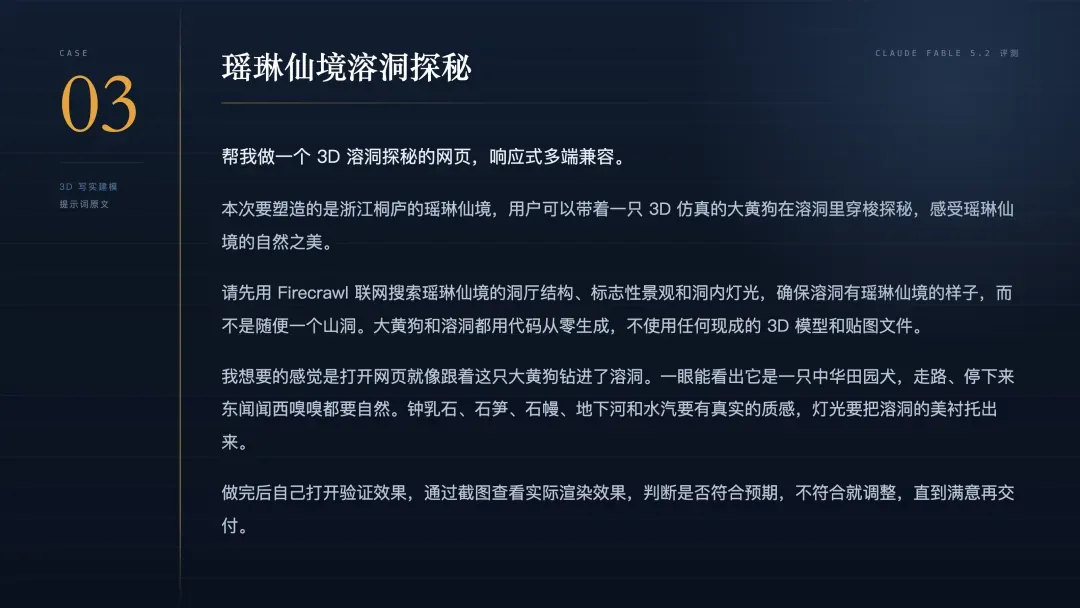
The AI first ran two rounds of online research with Firecrawl, compiling the cave’s chamber layout, the dimensions of its signature formations and its interior lighting into a research note. It then used the note to lay out three chambers and 18 scenic features.
Unexpectedly, this project did not work on the first try. At first the screen was black, yet the console showed not a single error, so the AI had to check the materials one by one. It eventually found that a shader was computing invalid values. Fixes took about eight rounds and roughly 91 minutes.
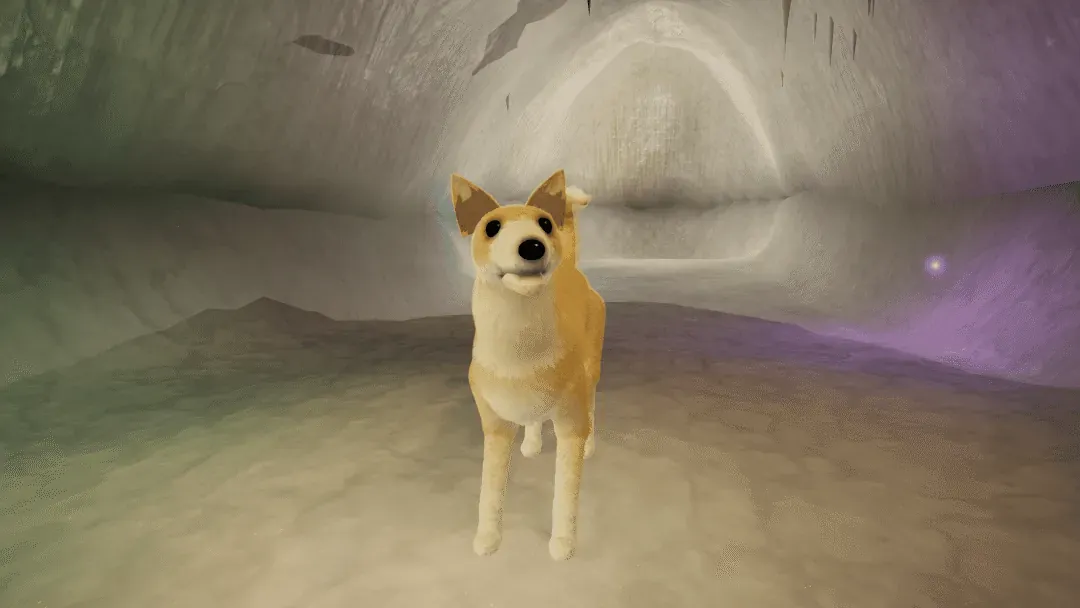
The finished piece opens with four large calligraphic characters reading "Yaolin Wonderland", with Dahuang ("Big Yellow") the dog standing beside them, looking sturdy.

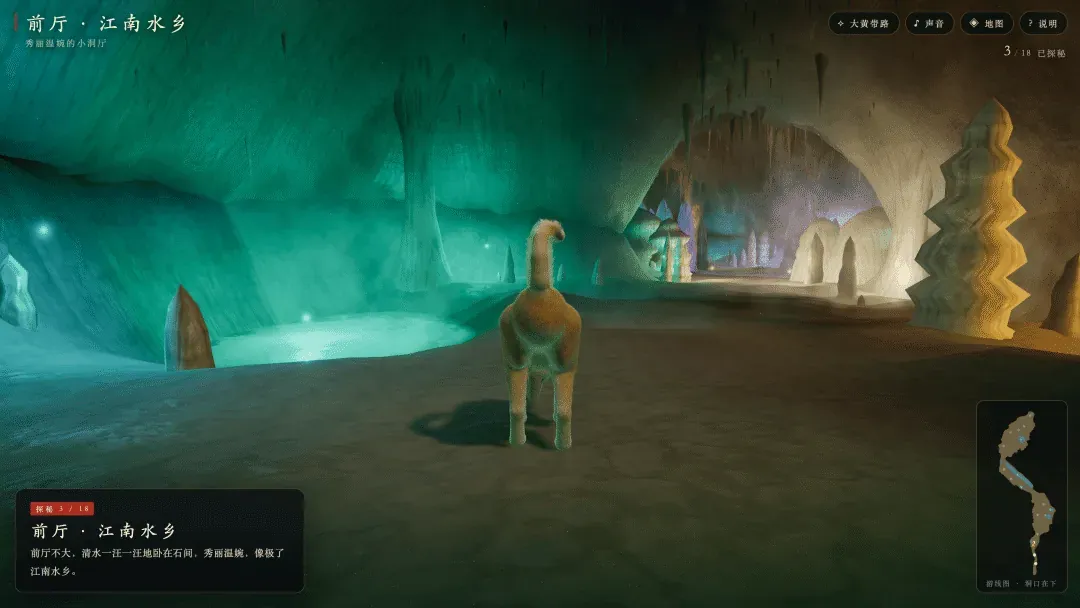
Using the arrow keys, you can lead Dahuang into the cave. In the entrance hall, blue-green light falls on pools and stalagmites, as graceful as a water town in southern China, and commentary cards pop up in the bottom-left corner.
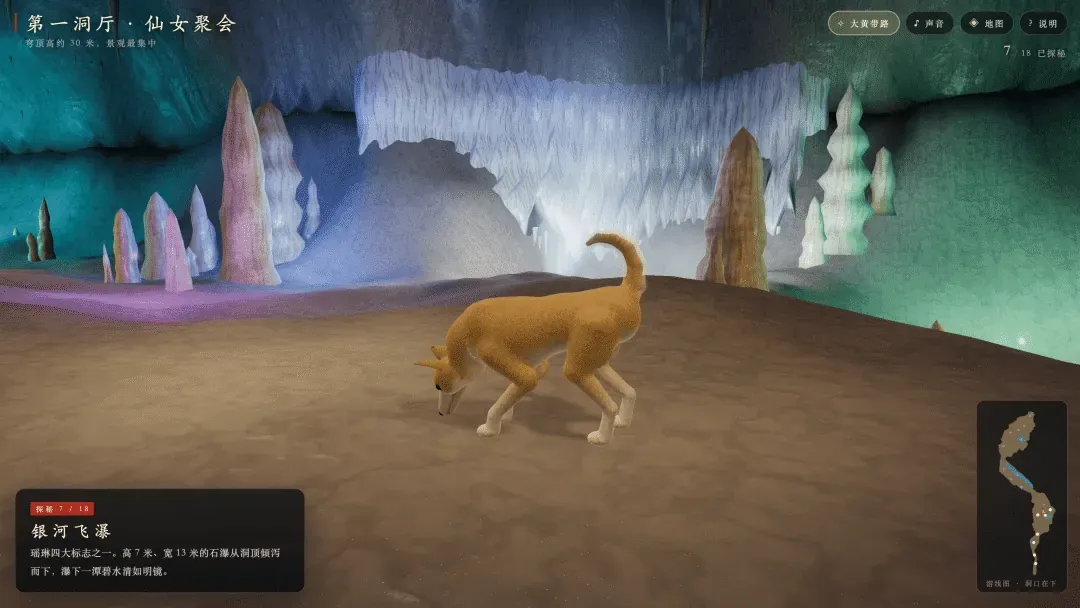
In the first chamber, the "Milky Way Falls" is rendered as an entire wall of white flowstone cascading from the cave ceiling, strikingly lifelike.
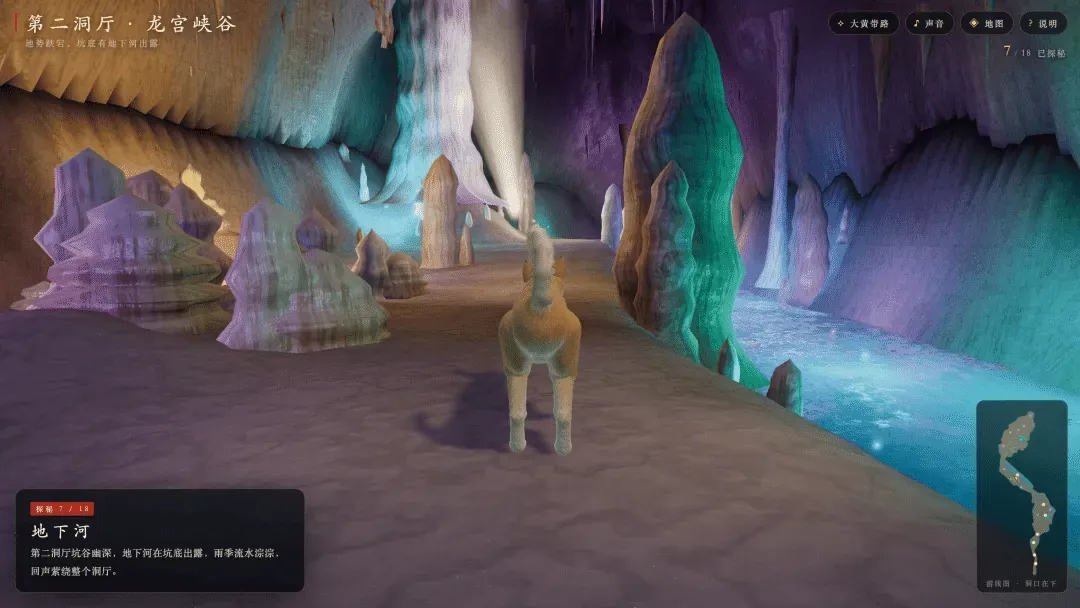
The second chamber has an underground river glowing blue, with a shaft of light falling from above, full of atmosphere.
In the third chamber, "Thirty-Three Heavens", the screen fills with layer upon layer of colorful stalagmites. Not a single texture or model file was used: the entire cave was sculpted in pure code. Yupi gave this result the highest rating, "S-tier".
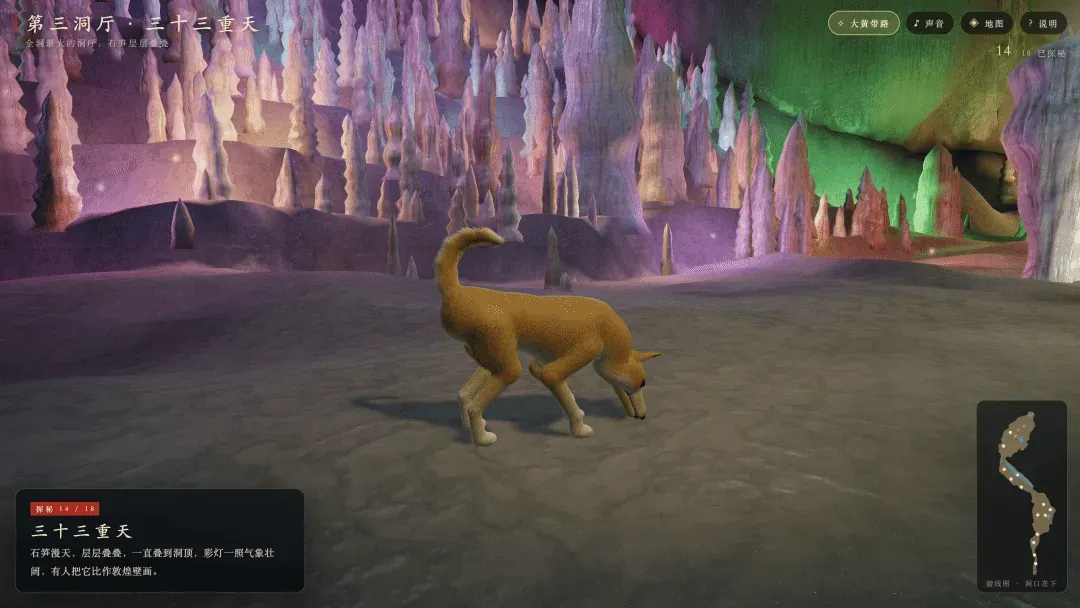
The one letdown is the dog’s head, which still falls short on realism.
Takeaways: top-tier taste, limited gains
Overall, Fable 5.2’s frontend design taste remains top-tier.
On these three projects, however, its improvement over Opus 5.5 is not obvious, and nowhere near as dramatic as claims online suggest, though the number of test cases may simply be too small.
AI is already very strong at animation and 3D, but this generation of models still cannot produce truly realistic creature models in pure code; that still requires third-party tools and libraries.
On speed, Fable 5.2 remains slow. All three projects ran for about an hour and a half each, and it did not feel any faster than Opus 5.5.
Three projects, more than RMB 500
Finally, the bill: the three projects cost more than RMB 500 in total, more than the nearly RMB 470 spent testing Fable 5.1. The unit price fell 20%, yet the total bill did not go down.
So unless you are building something big, such as a major project or product, Yupi’s advice is to hold off for now. Even with an official Claude subscription, the quota runs out quickly.
This article is adapted and republished from Programmer Yupi’s original post: 《Claude Fable 5.2 首发实测,顶级的审美,蛋疼的价格。。》 (Claude Fable 5.2 launch-day test: top-tier taste, painful price)