
Claude Ship for solo developers: hand off the PR follow-up first
Claude Ship connects code review, fixes, and approvals. Solo developers should first distinguish the local command from the team cloud service—and hand off repeated follow-up to reclaim time for their product.

Anthropic launched Claude Ship on November 23, connecting the reviews, fixes, and approvals that follow a proposed code change. It targets the work that comes after finishing a feature: returning to fix a failed test, addressing a review comment, then waiting for the next result.
A pull request, or PR, proposes a set of code changes for a project to accept. Even when you build a product alone, someone has to follow those changes through. For solo developers, the first job worth handing to Claude Ship is keeping up with PR feedback. Automatic approval can come later.
First, though, distinguish its two entry points. The /ship command you run in Claude Code and the Claude Ship service that works across a repository run in different places and are billed differently. Choose the wrong entry point, and an attempt to save a few interruptions starts with a new set of team settings.
Claude Ship for solo developers: local command or cloud service?
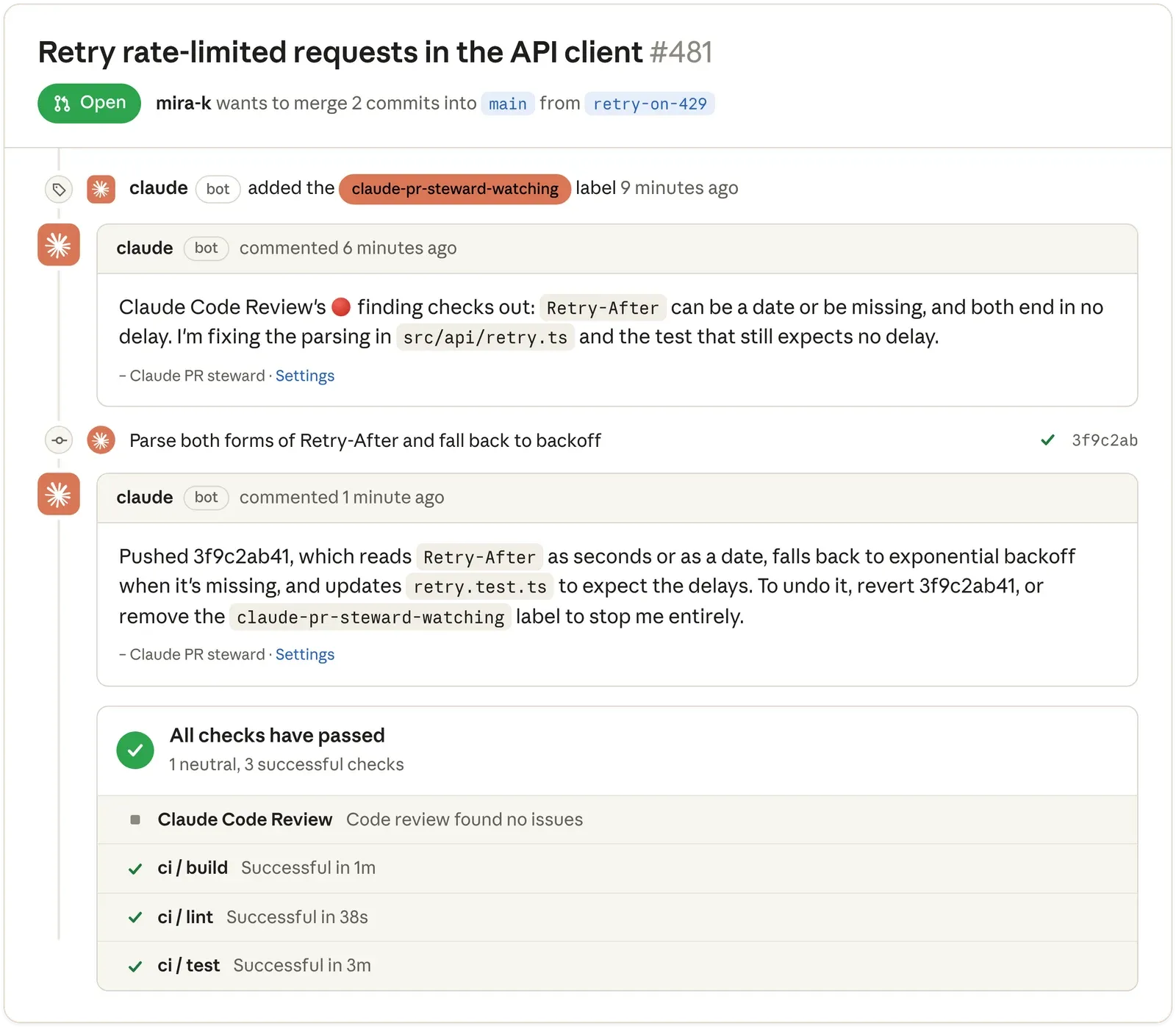
The local /ship command starts in your own Claude Code session, reviews a change, then keeps following the PR's feedback and failing checks. This ongoing process is called a watch: it handles a problem, pushes a fix, and checks the result. It counts against your personal Claude Code usage. While the watch runs, your computer must stay awake and the session must remain open. The native Windows version currently cannot start this ongoing watch.
If you need something to keep looking after several changes, consider the organization service. The full Claude Ship service runs in the cloud and is enabled for GitHub repositories by a Team or Enterprise organization. It is billed separately by tokens—the amount of information the model processes.
The three agents have distinct jobs. Code Review finds problems. PR Steward handles failing checks, merge conflicts, and review feedback. Claude Approvals reads the repository's approval policy and determines who still needs to sign off. PR Steward makes fixes; approval belongs to another stage. GitHub's repository rules ultimately determine whether a change can merge.
The local command is available starting with Claude Code v2.1.330. To keep pushing fixes on GitHub, use v2.1.331 or later, GitHub CLI 2.63 or later, and git 2.38 or later. Before running it, check git status to see which files are ready to submit: /ship can commit and push uncommitted changes, including new files. Once Claude has handled failing checks and review feedback and brought the PR to a mergeable state, you merge it. If the repository already has auto-merge enabled, it can also merge without another click once its rules are satisfied.
Why fewer small tasks can feel more exhausting
Hacker News user springtimesun has spent several months assembling a similar review workflow from individual pieces. They call the component that follows up on PRs a PR shepherd, and also use different models for review. They still review and merge changes themselves, but increasingly find that spending human time checking low-complexity changes is not worthwhile.
Yet they do not feel relieved. With the system taking care of small tasks, what reaches them consists of big decisions that require planning, research, and careful trade-offs. There are no easy intervals left in the work. They bill clients by the hour and wonder how long this can continue: each move up the chain still takes the same amount of time, or more.
Another user, marssaxman, says they have spent several months having Claude and Codex review each other's work: one reviews a PR, the other makes changes in response, then both write a summary of the changes for comparison.
Both users are describing workflows they built themselves. Claude Ship packages similar work into a ready-made product, but solo builders still have to decide where the time saved should go. What problem a customer actually wants solved, whether a feature is worth building, and which of two conflicting requests takes priority will still land on the builder's desk.
The documentation fix that merged that evening still had human sign-off
Anthropic describes an internal example in its announcement. A customer read the Analytics API documentation and misunderstood which accounts' data it could query. A product manager asked Claude Tag whether a fix was already in progress, and a documentation PR followed.
Code Review then found no blocking issues, a documentation reviewer signed off, Claude Approvals passed, and the change merged that evening. The product manager could move on while the review and fix workflow continued.
That feedback had a clear target for the fix: make the documentation explain which accounts' data could be queried. Once the author has made the problem clear, someone else can follow it through. If the requirement itself is vague, passing an automated review will not answer what the customer actually wants.
Claude Approvals keeps its rules in a repository file. They can allow routine changes through under the policy or require a person to approve certain changes. Starting in observe mode lets you see how it would decide before adopting those decisions. Model calls in observe mode still cost money, however, so set spending limits when enabling the organization service.
For solo product builders, we recommend handing off the fixes and follow-up after checks fail first. Consider repository-wide management only when several changes keep tying you up and starting individual sessions has itself become a burden. The saved time needs to be available for finding customers, listening to feedback, and deciding requirements. That is when the tool has taken a job off your hands.
Further reading
- Anthropic: Introducing Claude Ship
- Claude Code: Local /ship and /steward commands
- Claude Ship organization service and billing
- What PR Steward does
- Claude Approvals policies and merges
- Hacker News: Claude Ship discussion
- Reddit: Developers discuss their own review workflows
- IT Home: Product reporting by Luyuan
- 9to5Mac: Zac Hall's product introduction