
Upgrading to llama.cpp 1.0? Check your startup scripts for this flag
llama.cpp 1.0 removes an old flag that can stop a previously working service from starting. Check your scripts first, then test how your software connects to the new version.
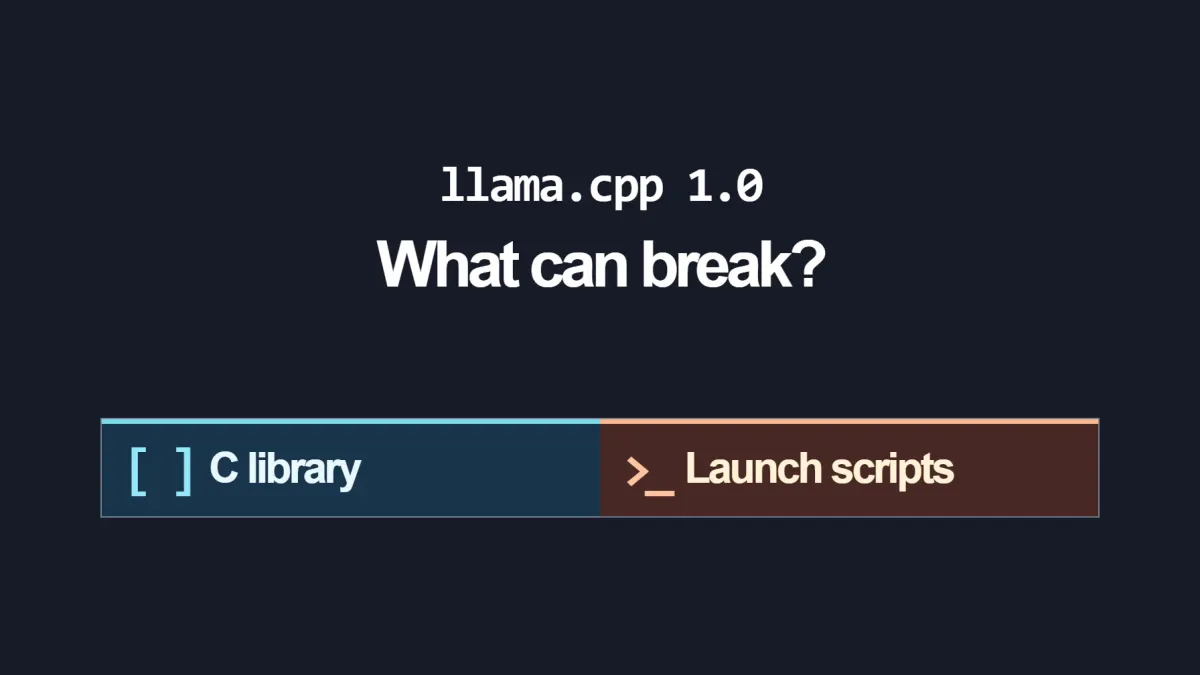
On November 13, llama.cpp and its underlying library ggml released v1.0.0. Philip Ndungu of ComputingForGeeks ran the same startup command on Ubuntu with the CPU builds of llama.cpp v0.9.0 and v1.0.0. With --defrag-thold in the command, the older build warned that the flag was deprecated and kept running. The v1.0.0 build refused to start. The maintainers removed the flag and its shorthand, -dt, during a cleanup.
To find the precompiled packages, open the 1.0 release page on GitHub and click build b12359 under Assets.
Check your service configuration before upgrading to llama.cpp 1.0
If you run llama-server yourself, search your startup scripts, service configuration, and container startup commands for --defrag-thold and -dt before upgrading. If you find either spelling, remove the flag and its value from the new configuration. The older build only issued a warning, so check startup configurations you haven't touched in a while. Keep the old service running while you start the new version on a separate port in a test environment with enough resources to load the same model. In single-model mode, wait for GET /health to return 200 before sending your usual application requests. The endpoint returns 503 while the model is still loading.
Recompile applications that link to libllama
Starting with 1.0, the project uses major version bumps to signal breaking changes to the public C API defined in its public headers. If your application links directly to libllama, recompile it with the new C headers. One function was renamed in this release from llama_set_embd_state_src to llama_set_ctx_state_src. If your project still uses the old name, update the call to match the new headers and rerun a test that exercises that function.
If you use language bindings for Python or another language, look up the supported llama.cpp version or build number in the binding project's release notes. Then follow the project's upgrade instructions.
Run your HTTP client requests end to end
Send the new instance an HTTP request your client already makes. For streaming output, let the client read the response from the first chunk to the end. If your application relies on structured output, have it parse the response as usual. If it sends images, try one it would send in regular use and run the request end to end. Switch traffic over once those requests work.
If you only use a desktop app, look up the bundled engine version in the app menu or release notes. If the app update includes a new engine, load the same model and try a task you run regularly.