
Jensen Huang returns to Nvidia, with the investigation still open
Nvidia's board has unanimously reinstated Jensen Huang as president, CEO and a director. An independent investigation continues, and a new compliance chief will report to a board committee. Who will oversee the returning founder?
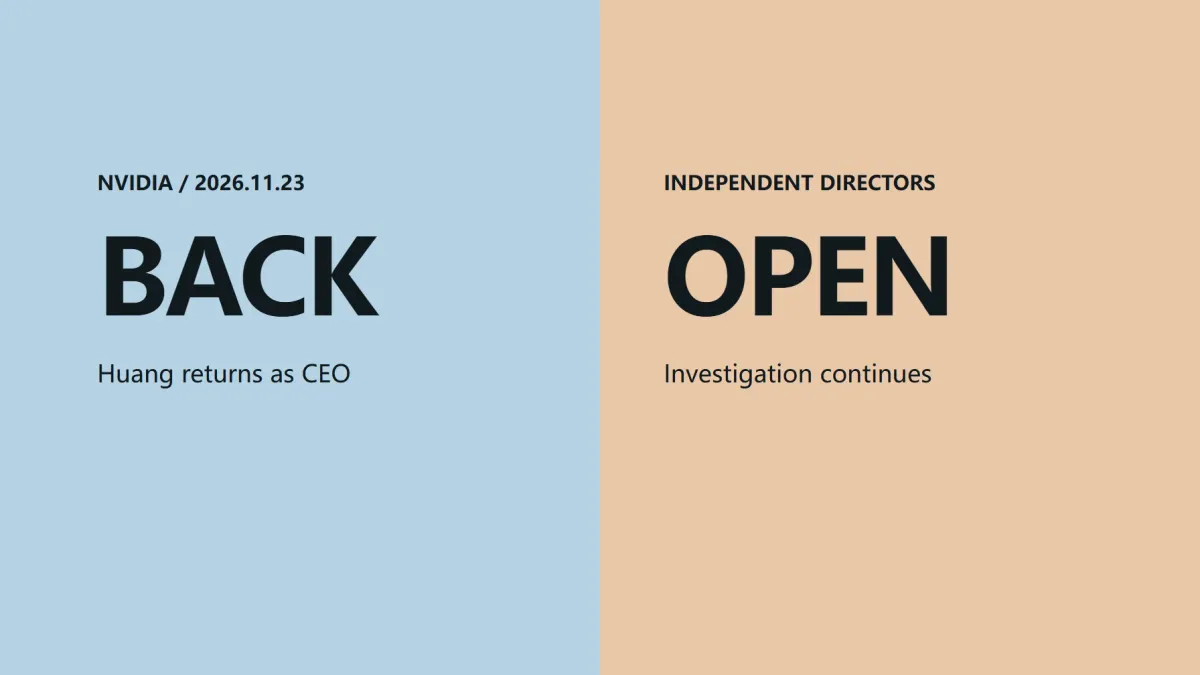
Nvidia has handed the company back to Jensen Huang. On November 23, it announced that its board had unanimously reinstated him as president, chief executive officer (CEO) and a director, effective immediately. Colette Kress, who had been running the company on an interim basis, remains chief financial officer, while Harvey Jones remains board chair.
The striking part of this return is how quickly the board changed its decision. CNN reporter Clare Duffy reported that Jones had said on last week's earnings call that the board did not intend to reinstate Huang. The search for a successor has now given way to the founder's return, while an independent investigation into reports that Huang had been targeted by a foreign intelligence effort continues.
Nvidia has chosen to keep Huang in charge of the business, leaving unresolved governance issues to independent directors and a new compliance structure. With its founder back, the company still has to answer who can effectively oversee the leader it has invited to return.
Jensen Huang returns: how Nvidia's leadership roles change
Huang has regained all three positions at once. He is again responsible for day-to-day operations and has rejoined the board to take part in major corporate decisions.
The two executives who led the interim transition remain in their other roles. Kress continues to run finance, and Jones remains board chair.
The board said in its announcement that, after several discussions and meetings with Huang, it was satisfied with his candor and ability to lead the company and unanimously agreed to bring him back. Jones also described reinstatement as being in the interests of shareholders, employees, partners and customers.
Who pushed for the return
Huang's earlier departure followed reports of extramarital affairs. CNN reported that one of the women involved was suspected by U.S. officials of having ties to Chinese intelligence. The resulting controversy extended beyond his private life to how Nvidia handles national security and compliance risks.
Trump publicly supported Huang's return. CNN reported that he said the U.S. economy needed Huang's leadership at Nvidia. Reuters also reported efforts by the president, investors and industry figures to bring him back.
Nvidia's own announcement said the board had received input from senior levels of the U.S. government and, on that basis, was confident that Huang's reinstatement posed no national security risk. Government input has entered the CEO appointment process at a publicly listed company, while the board remains responsible for the final decision.
Readers' disagreements over the decision are straightforward. In Reddit's hardware community, DuranteA argued that, even with ethical controversy unresolved, markets would favor a more effective CEO. Personal_Simple8639 likewise saw investors as preferring a controversial Huang to an uncontroversial successor.
Other readers worried that his return would make the earlier issues disappear. The board's arrangement is to restore Huang to his roles while retaining responsibility for an independent investigation and continuing oversight.
The investigation continues. Who will the new compliance chief report to?
Following reports that Huang had been targeted by a foreign intelligence effort, Nvidia previously established a special committee made up entirely of independent directors and retained independent counsel to help investigate. Its latest announcement reiterated that the investigation would proceed to its conclusion, with Huang's support and commitment to cooperate.
Investigators will continue their work after Huang resumes control of the company. Nvidia will also continue to cooperate with government investigations and inquiries.
Nvidia has separately formed a National Security and Export Control Committee, also composed entirely of independent directors. It oversees trade compliance and national security risks and is engaging lawyers and advisers with relevant experience. The special committee investigates the specific events, while this committee provides continuing risk oversight.
The company has also begun searching for a newly created chief compliance officer. The role will oversee compliance across Nvidia and report to the board's Nominating and Corporate Governance Committee. The compliance chief will therefore have a direct reporting line to a board committee.
Whether that route works will depend on whether the compliance chief can bring problems before directors and whether those directors are willing to act on them. The more irreplaceable a founder is considered, the more clearly defined responsibilities and practical support the people overseeing him need. Otherwise, the new role could simply add another title to the organization.
This reversal leaves the AI industry with a concrete succession problem. The company affects many customers and partners, yet its board brought the founder back less than two weeks after his departure. Assessing such a company should involve looking beyond its products and operating capabilities to whether it has people who can take over, directors who can dissent, and a compliance chief who can escalate problems. Huang's return settles who leads Nvidia today. The company still has work to do on succession and oversight.